
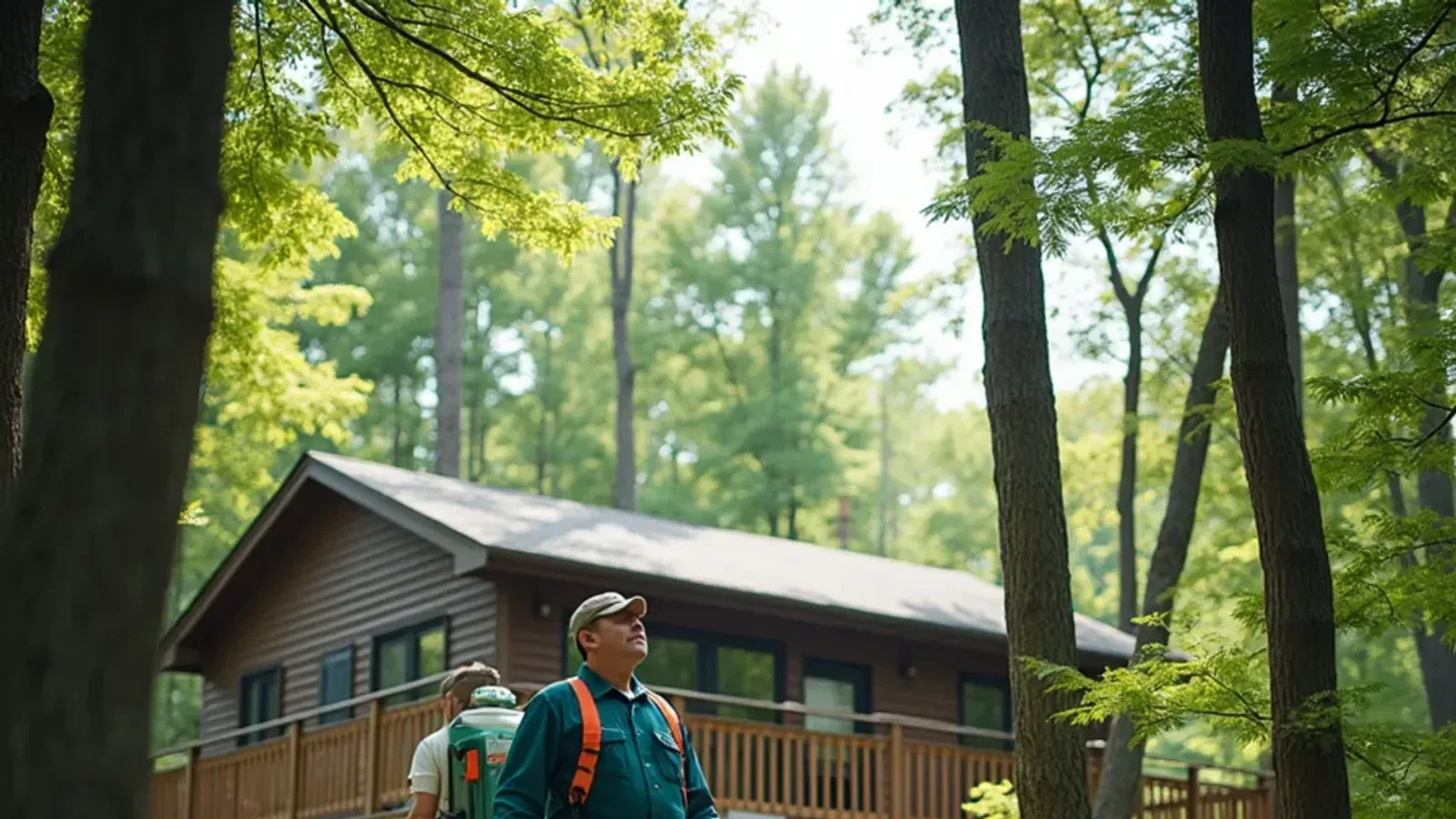
What makes a wooded lake lot a magnet for pests?
Lake communities like Country Squire Lakes, Cordry Sweetwater and Hidden Valley were laid out among hardwoods. Residents love the privacy and shade. Insects love them too, and the same features that make the lots pleasant also support more pests than an open suburban yard.
Four conditions stack up. Tree limbs overhang roofs and give ants a bridge. Moisture from the lake, humid air and shaded decks keeps wood damp. Insects breed in standing water and leaf litter, which feeds spiders. And many lake homes are second homes or weekend cabins, so a nest can grow unnoticed for weeks.
- Canopy trees that touch the roof, siding or deck.
- Decks, docks and stairs built close to the ground, where wood stays wet.
- Firewood stacks and lumber piles beside the house.
- Dock and porch lights that pull insects, which then attract spiders.
- Seasonal use, so problems go unseen between visits.
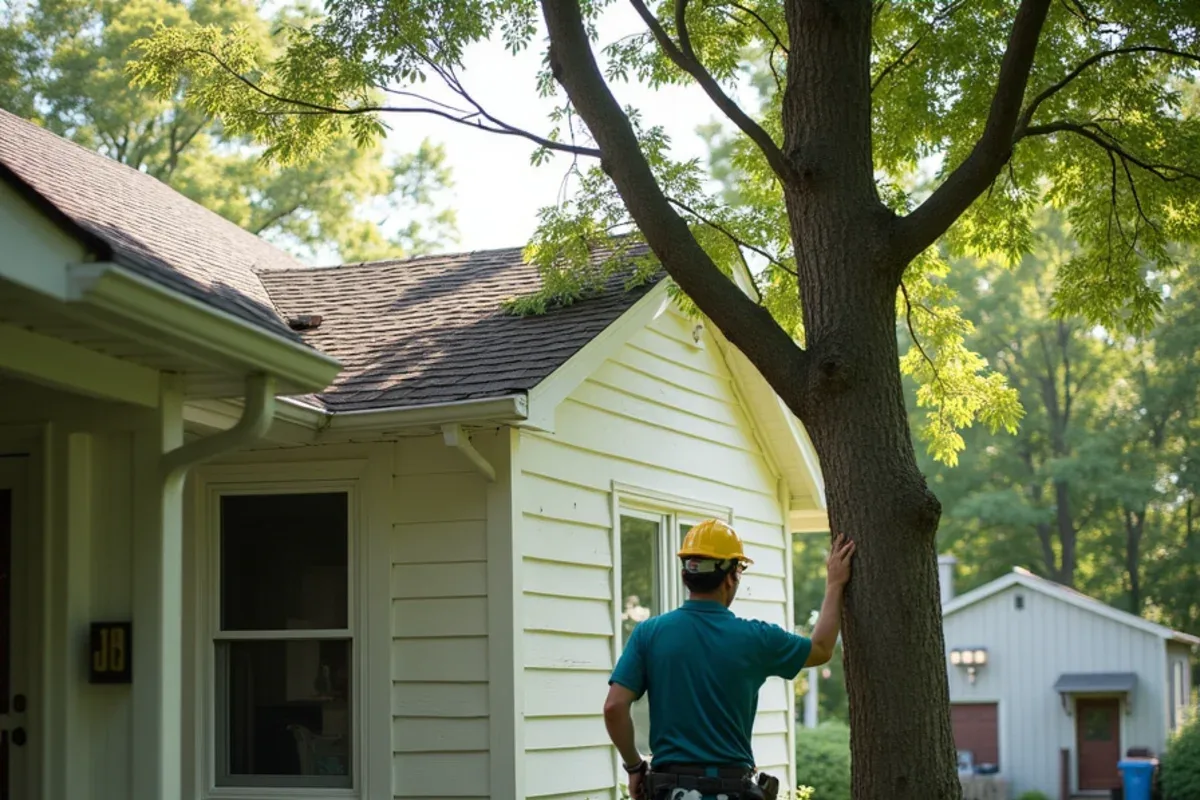
These communities also share a lot of edge. Lake shores, wooded buffers and unmowed common ground sit between houses, so pests move easily from one lot to the next. Your own work helps, but a neighbor's rotting stump or woodpile can restock your yard within weeks.
What about mosquitoes and ticks?
Standing water, leaf litter and shade bring mosquitoes and ticks to the same lots. We cover them in detail in our guide to ticks and mosquitoes near Muscatatuck, and most of the yard advice applies to lake lots as well.
Need it handled now?
Call Miller's at (321) 496-4080 for same-day help in the Hayden area.
Carpenter ants: the lake-home wood problem
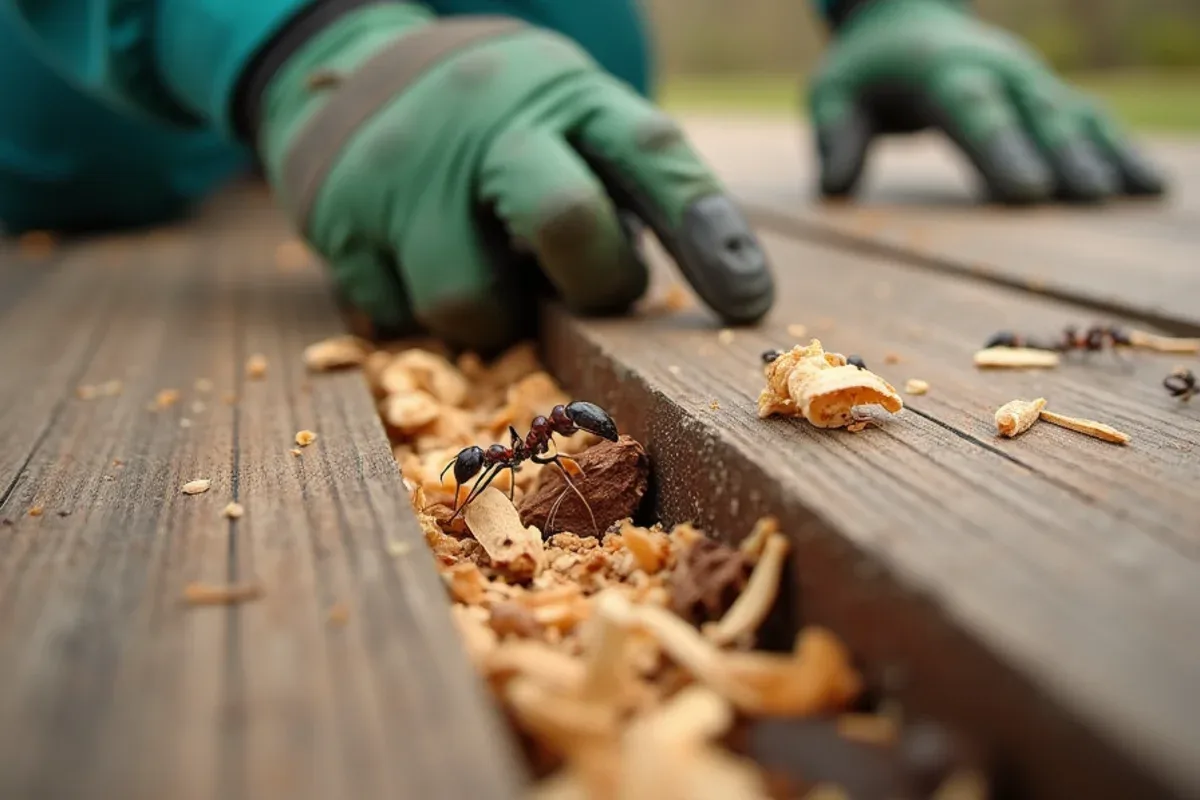
Carpenter ants do not eat wood the way termites do. They excavate it to make nests, and they prefer wood already softened by moisture. A leaking window, a rotted deck board or a wet fascia is an open invitation.
Look for piles of coarse sawdust-like shavings, sometimes with bits of dead insects, beneath a gap or beam. Listen for faint rustling in walls on quiet nights. Large black ants walking at night, especially in spring, often point to a colony inside or near the house.
- Rustling or faint crackling inside walls, especially in spring.
- Winged ants indoors in late winter or spring, which suggest an established colony.
- Trails of large ants along deck rails, tree limbs and power lines to the roof.
- Soft or hollow-sounding wood near windows, doors and the base of porch posts.
Parent colonies often live in a stump or hollow tree and send satellite nests into the house. That is why wiping ants at the kitchen is rarely enough. Our ant control work focuses on finding the nest, treating the trail and fixing the moisture that made the wood attractive.
Carpenter ants or termites?
On a wooded lot, both are plausible, and mixing them up leads to the wrong treatment. Carpenter ants leave clean, smooth galleries and shavings. Subterranean termites leave mud-lined tunnels and packed soil. If you are not sure what you found, get it identified first. Treating for ants when the real problem is termites can cost you a season of damage.
Wasps and hornets around the cabin and dock
Paper wasps build under eaves, deck rails and boat lifts. Bald-faced hornets hang gray, football-shaped nests in trees along the shoreline. Yellow jackets nest in the ground and under decks. A lake home offers all of these plenty of places and plenty of water.
Many lake owners return in spring to a nest the size of a softball under the porch roof. Early in the season it is small and the colony is only a few insects. By August the same nest may hold hundreds. Check eaves, grill covers, mailboxes and dock boxes on arrival.
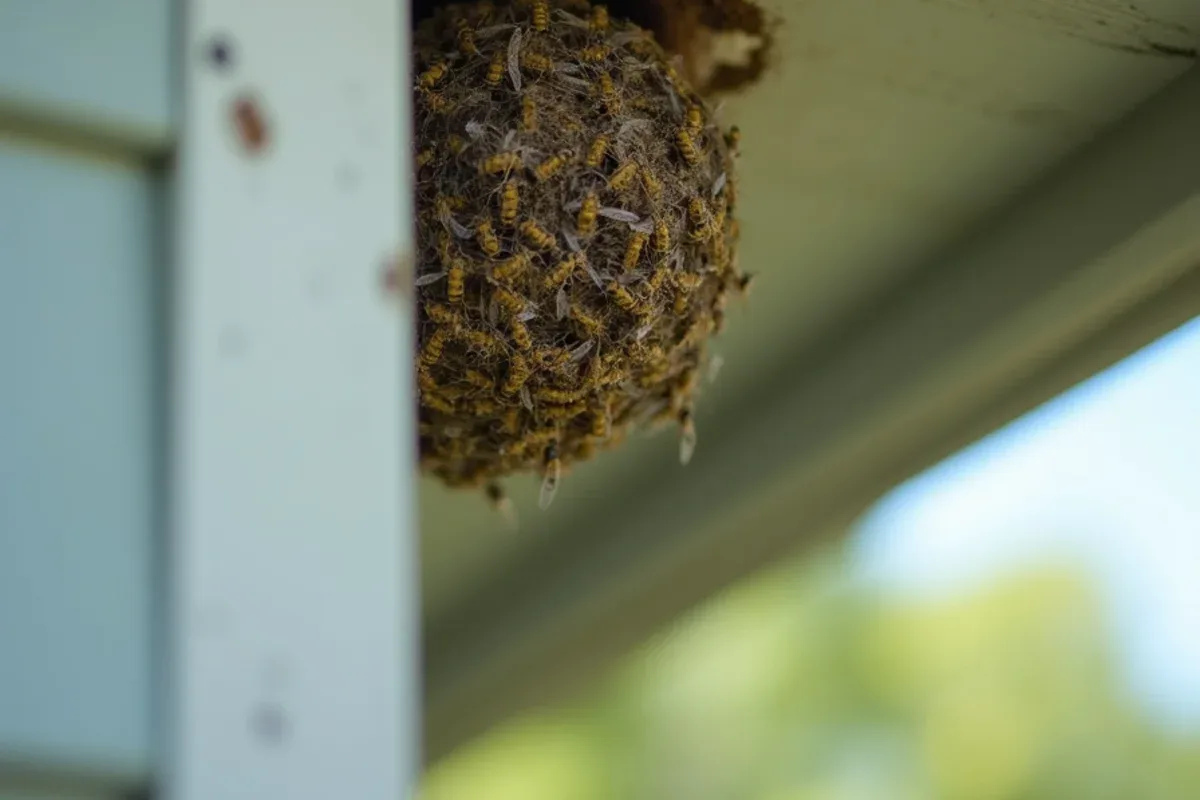
Do not knock down a large nest yourself. Our wasp and hornet removal service treats the colony and removes the nest, and same-day calls are common for nests by a door or dock. Treatment at dusk keeps the colony home and calm.
In Country Squire Lakes, lots are wooded and homes sit near shared lake paths. A nest near a path becomes a neighbor issue as well as your own. Reporting early helps everyone.
Spiders at the lake: mostly harmless, rarely welcome
Orb weavers string big webs between dock posts and porch rails at night. Wolf spiders hunt on the ground and wander indoors. Cellar spiders cluster in basements and corners. Nearly all are helpful predators, and none are a reason to panic.
Webs get most of the attention, but the biggest spider-related complaint at lake homes is the daily rebuild. Orb weavers rebuild their webs every evening across the same doorway or dock light. Knock them down with a long-handled broom in the morning and the spider will usually move on to a quieter spot.
Spider numbers follow insect numbers. Bright lights draw moths and midges, and spiders move in to eat them. Swap white bulbs for warm or yellow bulbs, turn off lights you do not need, and keep screens tight. The fewer insects at the glass, the fewer webs by the door.
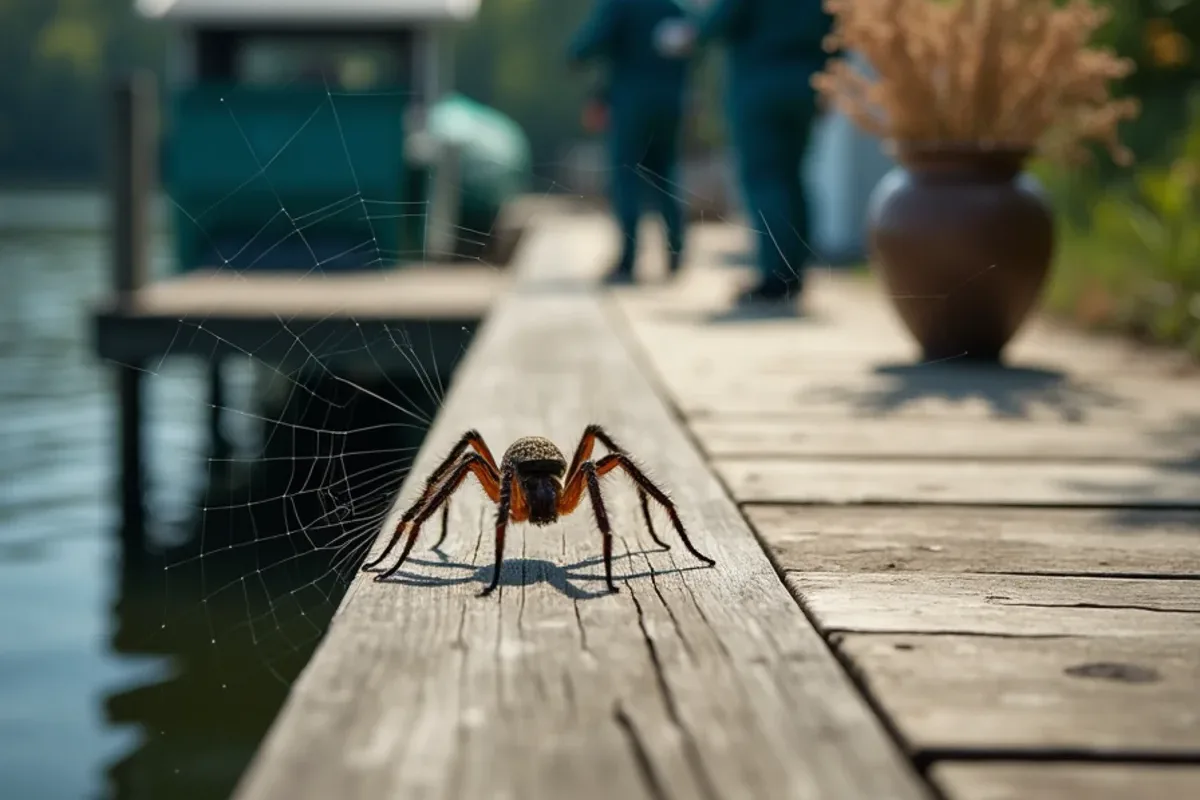
Around Cordry Sweetwater Lakes and Hidden Valley, owners also find black widows in woodpiles and dock boxes, though they are uncommon. Wear gloves when moving lumber. Brown recluse spiders occur in southern Indiana as well, and we cover them in a separate post on brown recluse in older homes.
A seasonal plan for lake homes
A one-time spray tends to fail at a lake property because new insects arrive all summer. A seasonal rhythm works better, especially if the home sits empty during the week. The list below matches typical lake-owner schedules.
Spring opening: inspect and clear
Walk the roofline, deck and dock. Remove starter wasp nests, check for ant shavings and look for moisture damage.
Trim and lift
Cut tree limbs back several feet from the roof and siding. Stack firewood off the ground and away from the house.
Fix wet wood
Replace rotted trim or deck boards, repair gutters and clear drainage so water moves away from the foundation.
Mid-summer: recheck eaves
Wasp colonies grow quickly in July. A quick look every few weeks catches nests while they are small.
Early fall: perimeter treatment
Seal gaps, treat the exterior and close vents before you leave for the season.
Closing: clean out food
Empty pantries, seal trash and dry out damp spots so a closed cabin does not become a shelter for mice and ants.
Ask your neighbors what they see too. Shared concerns, like a bald-faced hornet nest in a common tree or a dead tree full of ants, are easier to address together than alone.
A preventative pest control plan can handle several of these steps on a schedule, so a weekend cabin is not left unattended for months.
Frequently asked questions
Why do I have carpenter ants at my lake house?
Are spiders at the lake dangerous?
How can I keep wasps off my dock and deck?
Does a vacant lake home need pest control?
Lake living is worth it, and pests are just part of the setting. Trim trees, fix wet wood, watch the eaves and keep a plan for the seasons you are away. If you own a lake home near Hayden, Country Squire Lakes or anywhere in southern Indiana, call Miller's Termite and Pest Control at (321) 496-4080.