
Ant Control in Hayden, IN & Jennings County
A line of ants across the counter every morning, no matter how many you wipe up, means the colony is still alive somewhere in the walls. Miller's finds where the trail leads, baits the colony itself, and treats the outside edge of your Hayden home so new foragers stop moving in. Call (321) 496-4080.
- 5.0 ★ on Google · 35 reviews
- Family-owned for over 12 years
- Same-day help available
- Serving Hayden & Jennings County
- Fair, up-front pricing
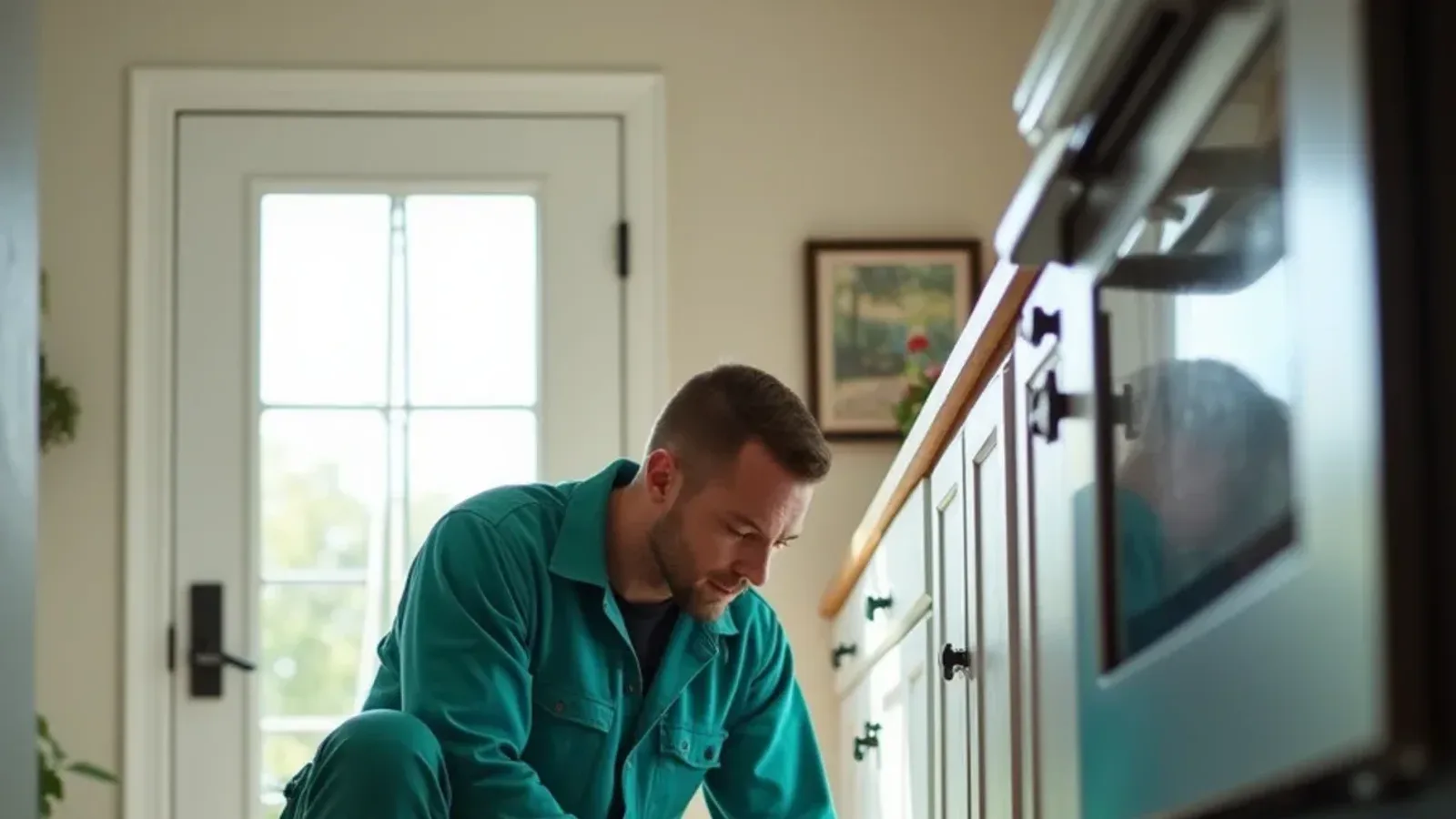
What our ant treatment covers
Ant control that works is built around the nest, not the ants you can see. Foragers are a small fraction of the colony, so spraying them on the counter feels productive and changes almost nothing. Our visit starts with identifying the species. An odorous house ant colony, a pavement ant colony and a carpenter ant colony each need a different approach.
From there the crew places bait where workers will carry it home. We also treat the foundation edge and the cracks where trails enter. You get a plain explanation of what we found, what we used, and what to expect over the next two weeks as the colony declines.
- Species identification before any product goes down
- Targeted gel and granular bait for sugar-feeding and protein-feeding colonies
- Exterior perimeter treatment along the foundation, sills and door thresholds
- Crack-and-crevice work around plumbing, cabinets and window casings
- Inspection of damp wood, porches and roof lines for carpenter ant activity
- Follow-up service if trails return after the bait has had time to work
Kitchens get special care. Gel bait goes in tiny dots, never on food-prep surfaces, and we ask you to skip wiping trails until the bait has done its work. Wiping removes the scent path that workers use to find it, and the colony takes longer to collapse.

Which ants you have, and why they came inside
Three species account for most calls in Jennings County. Odorous house ants are tiny, brown, and smell like rotten coconut when crushed; they trail to spilled juice and crumbs. Pavement ants leave little sand mounds along driveways and slab edges. Carpenter ants are large, black or black and red, and tunnel into wood that has gotten wet.
Weather drives most of the timing. After heavy spring rain or a hot dry stretch in August, colonies relocate. A trail that was in the mulch yesterday is in your pantry today. Mulch piled against siding, branches touching the roof, and a leaky gutter or tub drain all give ants an easy path and a reason to stay. Firewood stacked against the house and stumps close to the foundation are favorite carpenter ant sites.
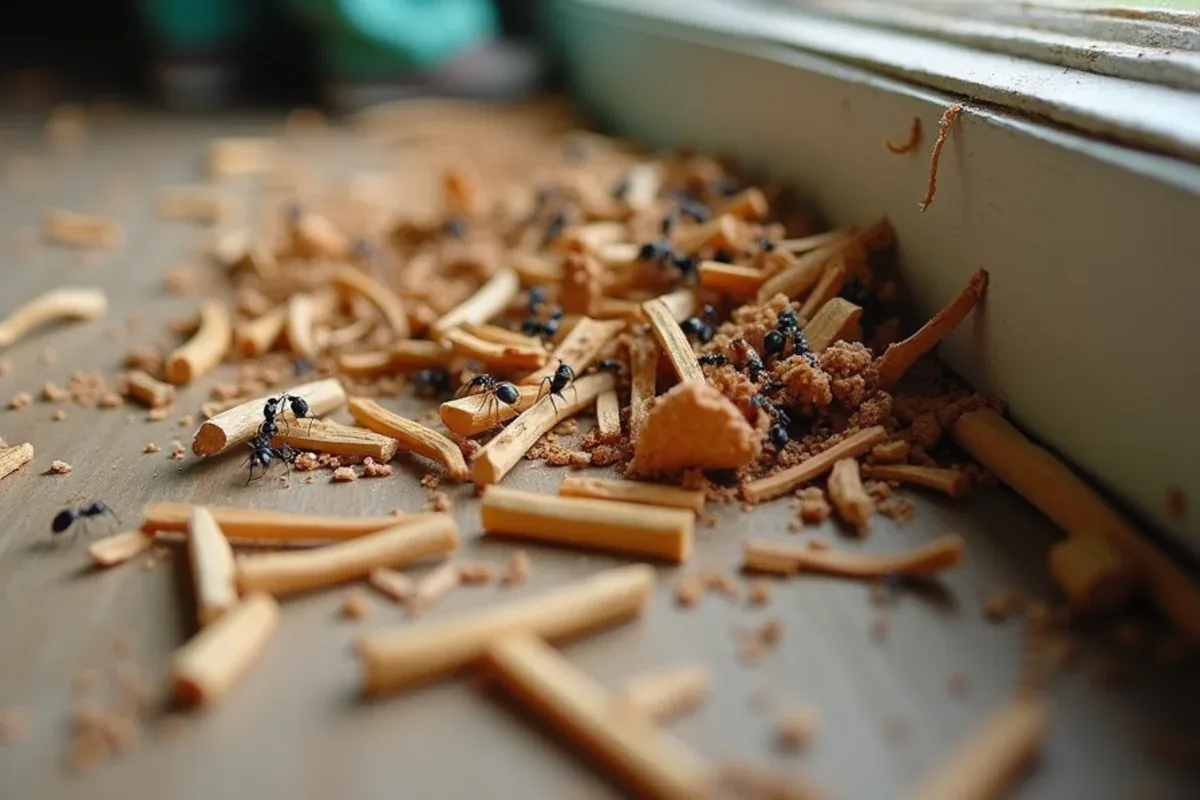
Sawdust-like shavings pushed out of a tiny hole, or faint rustling inside a wall, point toward carpenter ants. Those colonies do not eat wood, but they excavate it, so a damp sill or porch post can hide a problem that grows for years.
How an ant visit unfolds
Walk the trail
We follow the ants you have seen back toward their entry point and note where they feed, so the plan fits the way this colony behaves.
Identify the species
A close look at size, color, node shape and trail habits tells us whether this is a sugar-feeder, a protein-feeder or a wood-nesting colony.
Bait the colony
Slow-acting bait goes where workers will find it and carry it back to the queen. It looks like nothing is happening for a few days, which is exactly the point.
Treat the perimeter
We treat the foundation edge, door thresholds and window sills outside so new foragers meet a barrier before they reach the siding.
Find the moisture
For carpenter ants we probe damp wood around windows, porches and roof lines and tell you which repairs will stop a repeat.
Check and follow up
Trails should thin within one to two weeks. If they do not, we come back and adjust the bait instead of just spraying again.
Dealing with ant control in Hayden or nearby?
Call for same-day help or a straight, up-front quote.
What drives the price of ant work
Ant jobs vary a lot, so there is no honest flat rate. A single kitchen trail from odorous house ants is a quick visit. A carpenter ant colony inside a wall, with a satellite nest in a porch post, takes more time to find and treat.
The main factors are the species and how far the colony has spread. The size of the home and its outbuildings matters too, as does a one-time treatment versus a recurring plan. Lake houses and cabins around Country Squire Lakes with wooded lots usually need more exterior work than a town lot with a mowed yard. Seasonal homes that sit empty for weeks also tend to build up colonies unnoticed, which adds inspection time.
We quote the price before starting. If ants keep coming back, an ongoing preventative pest control plan is often cheaper than repeated one-off visits.
Ants, wood damage and Indiana rules
Pesticide use for structural pests in Indiana is regulated by the Office of Indiana State Chemist, which sets the label and application standards applicators follow. That is general information about the state system, not a credential of ours.
If a home sale is coming up, a wood-destroying insect inspection on the NPMA-33 form covers carpenter ants as well as termites. Carpenter ant activity near damp framing sometimes needs a second look, so schedule the inspection early.
Not sure whether you have ants or termites? Swarmers look alike to most people, and our guide to carpenter ants versus termites shows the differences. Treating the wrong insect wastes a season.
Why spraying makes it worse
Repellent sprays scatter foragers, and some species respond by splitting the colony into several smaller nests. Odorous house ants and pavement ants are especially prone to budding. That is why the trail may return in a new spot a week after you sprayed the old one.
Why people call a local crew for ants
Miller's is family-owned and has worked southern Indiana homes for over twelve years. Customers rate the company 5.0 stars across 35 Google reviews. Many mention the same things: a straight explanation, a fair price, and a crew that shows up fast.
Same-day visits are common for ant calls, which matters when the trail is in the kitchen. We also look at the habits that feed ants, such as pet food left out overnight, damp sponges, and honeydew-producing aphids on shrubs against the siding. We treat the colony rather than selling you a spray schedule, and we come back if the bait did not finish the job. Termites are a separate threat, so we also handle termite control when the inspection turns up more than ants.
What customers say about our ant control
5.0 from 35 Google reviews“Jim was polite, knowledgeable, and prompt. We are so relieved that he was able to get rid of our ant problem, and we can't recommend him enough!”
Where we handle ant control
Downtown frame homes on old stone foundations give odorous house ants and pavement ants easy trails into kitchens.
Dense Seymour neighborhoods mean pavement ants nest under slabs and driveways, then forage straight into pantries and restaurant prep areas.
Moisture-soft timbers in Vernon's historic buildings, damp from the Muscatatuck, are exactly where carpenter ants set up satellite nests.
Wooded lake lots with stumps, decks and firewood stacks make carpenter ant colonies common around Country Squire Lakes cabins.
Farmhouses beside Sand Creek fields see big pavement ant colonies and carpenter ants working through porch posts and old sills.
Older crawlspace homes edged by open farmland collect odorous house ants after rain and carpenter ants in damp sill plates.
Mid-century ranch homes and mulched landscaping around Columbus hide odorous house ant colonies that surge indoors after summer storms.
Hillside brick rowhouses with damp walls and old window framing in Madison invite carpenter ants and sugar-seeking odorous house ants.
Flood-prone river bottoms push ground-nesting ants into county homes, while wooded edges feed carpenter ants in dying trees.
Courthouse-square buildings and homes near the state forest knobs host carpenter ants in rotting limbs and pavement ants in slabs.
Ant Control — FAQs
Why do ants keep coming back after I spray?
Are carpenter ants damaging my house?
How long does it take bait to work?
Can you treat ants in the kitchen safely?
Do you offer ongoing ant prevention?
Related services
Termite Control
Termite Control across Hayden and Jennings County.
Learn morePreventative Pest Control Plans
Prevention Plans across Hayden and Jennings County.
Learn morePest Control Services
Pest Control across Hayden and Jennings County.
Learn moreKeep reading: carpenter ants vs termites
Ant Control in Hayden, done right
Miller's Termite and Pest Control · Hayden, IN 47245 · Call (321) 496-4080 for same-day help across Hayden and Jennings County.
- 5.0 ★ on Google · 35 reviews
- Family-owned for over 12 years
- Same-day help available
- Serving Hayden & Jennings County
- Fair, up-front pricing