
Why are subterranean termites so common here?
Subterranean termites live in the soil and build their colonies underground. They need moisture, soft cellulose and shelter from temperature swings. Southern Indiana supplies all three with very little effort, which is why termites are the region's most important structural pest.
Jennings County sits where rolling farmland, hardwood timber and creek bottoms meet. The Muscatatuck River and its tributaries run through the area, and the ground near them stays wet for much of the year. Forests produce fallen logs and stumps, which are natural food for termite colonies, and the colony does not know where the woodlot ends and your house begins.
A mature colony forages over a wide area, and one colony can reach a house from many directions. The termites do not come to a home looking for a meal so much as stumble across it while looking for food in every direction. Homes built on wooded lots tend to sit in the middle of the foraging zone.
Wooded lots and river bottoms
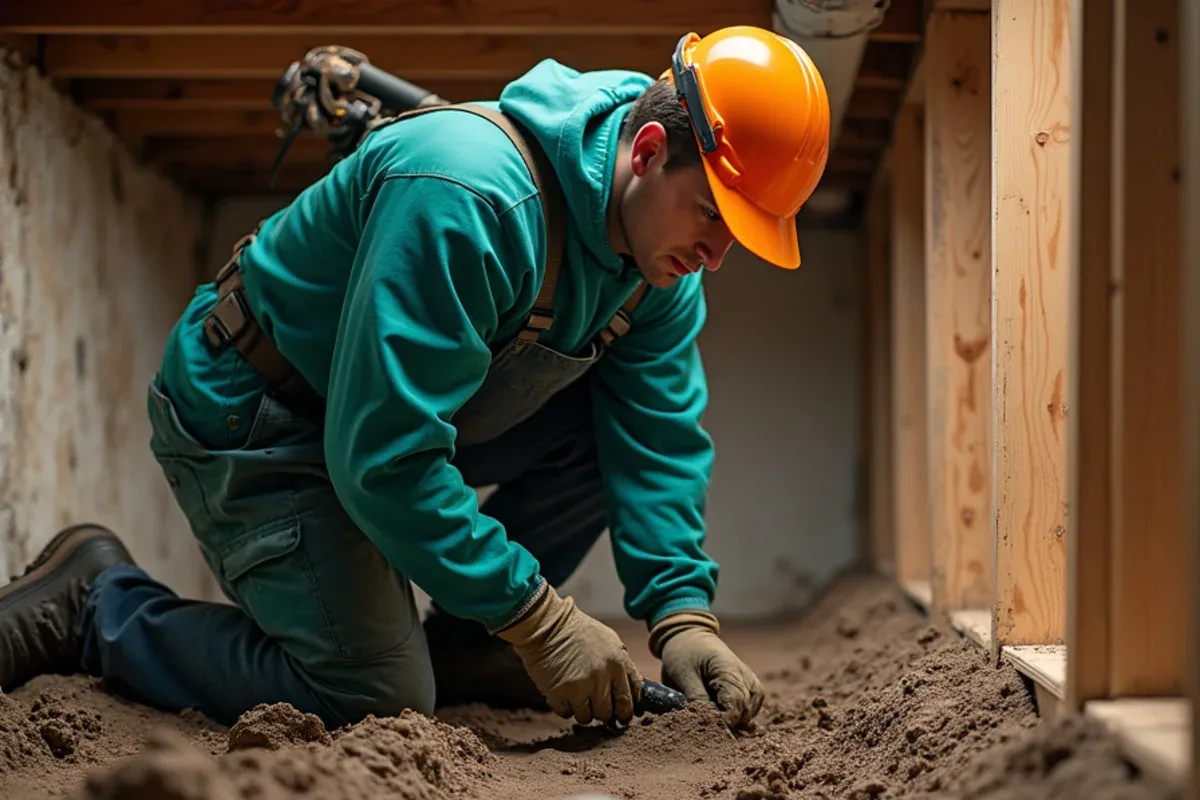
Creek bottoms along the Muscatatuck and its forks stay wet long after a rain. Floodplain soil is rich in rotting wood and leaf litter, and that organic material feeds colonies year-round. Homes built on or near bottomland sit on ground that termites already treat as home.
Subdivisions carved out of timber face a similar problem. Builders clear the trees, but roots, stumps and buried scrap lumber stay in the ground. Those leftovers can support a colony for years, and the colony then looks for the next meal, which may be the sill plate of a new house.
Need it handled now?
Call Miller's at (321) 496-4080 for same-day help in the Hayden area.
Clay soil, crawlspaces and the moisture problem
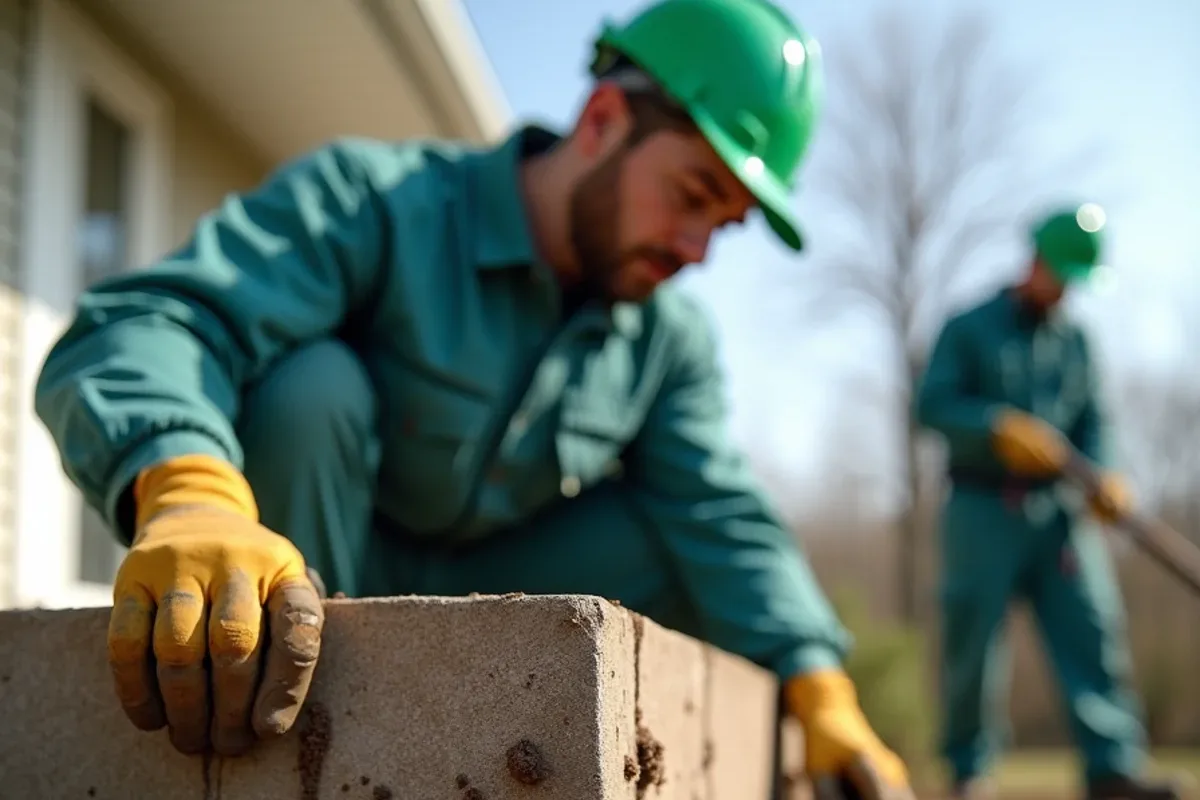
Much of the county has heavy clay. Clay drains slowly, holds water against foundations, and swells and shrinks with the seasons. Those shifting soils crack slabs and open hairline gaps around pipes and footings, and termites can slip through gaps as thin as 1/32 of an inch.
Crawlspaces are the second big factor. Many older homes in Vernon, North Vernon and the surrounding townships have vented crawlspaces with exposed soil, wooden sills and floor joists. In humid months these spaces stay damp, and damp wood is the preferred menu for termites and the fungi that soften it.
- Clay soil that stays wet against the foundation after rain.
- Vented crawlspaces with bare dirt floors and no vapor barrier.
- Wood-to-soil contact from porch posts, siding and old form boards left under decks.
- Gutters and downspouts that dump water at the foundation line.
- Mulch and landscape timbers piled against siding.
- Firewood and stumps stored beside the house.
Why a newer house is not automatically safe
A slab home has no crawlspace, but termites enter through expansion joints and plumbing penetrations in the slab. A newer build on a cleared lot can face real pressure. The colonies that lived on the lot are still there, and the disturbed soil gives them easy paths. Age alone tells you little. Moisture and conditions around the foundation tell you more.
What are the early signs of termites in a home?
Termites work out of sight, so the signs are subtle. Homeowners often find them while doing something else, such as moving a shelf, pulling up carpet or remodeling a bathroom. Knowing what to look for turns a surprise into a manageable repair.
| Sign | Where to look | What it means |
|---|---|---|
| Mud tubes | Foundation walls, piers, sill plates | Termites travel between soil and wood in protected tunnels. |
| Swarmers and shed wings | Windowsills, light fixtures, basement floors | A mature colony is nearby, often in spring. |
| Hollow-sounding wood | Baseboards, floor joists, door frames | Termites eat the inside and leave a thin shell. |
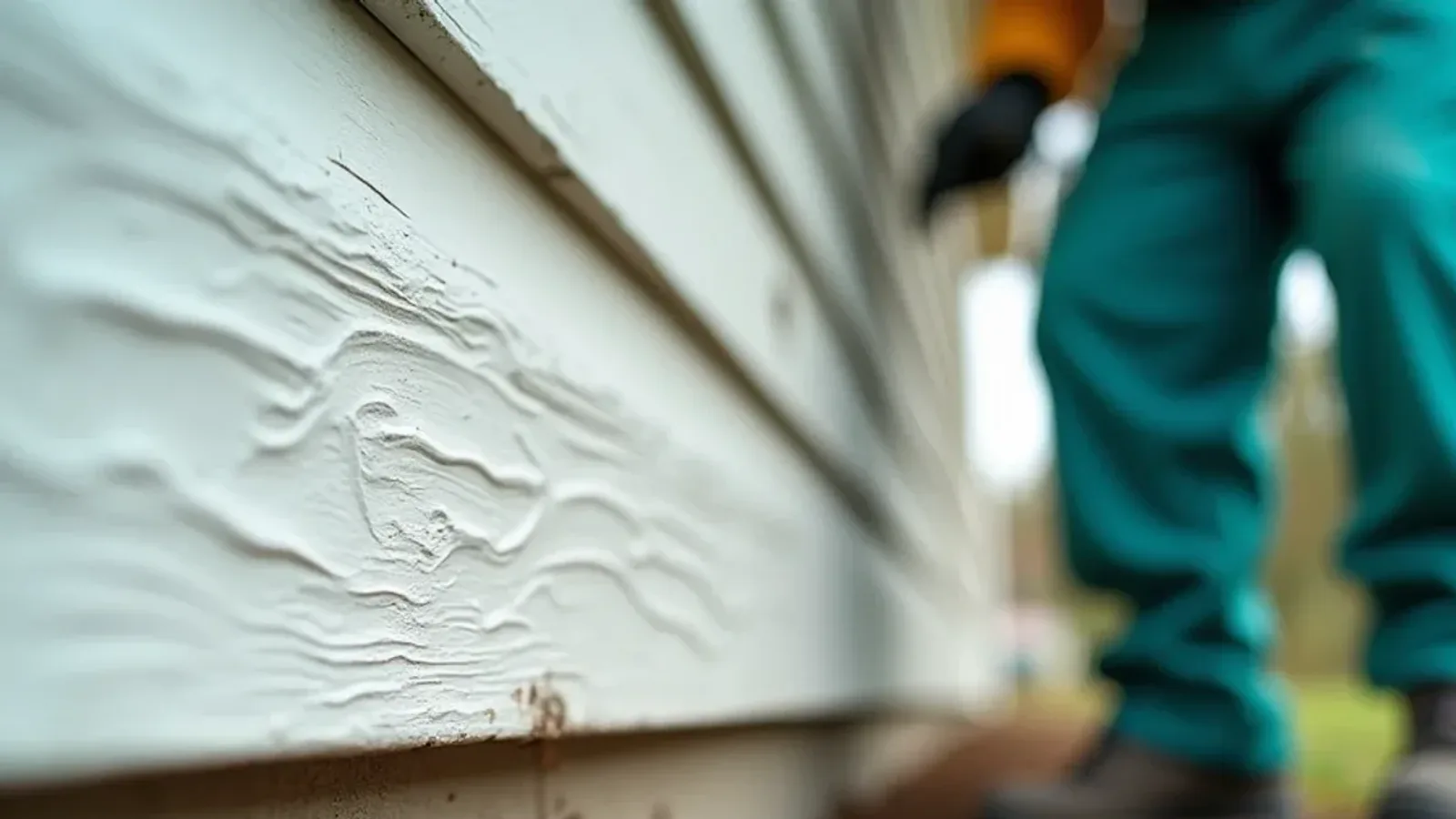
| Buckled paint or soft drywall | Walls near the floor | Moisture and termite tunnels behind the surface. |
| No sawdust piles | Damaged wood surfaces | Subterranean termites pack galleries with soil, not the pellets that drywood termites push out. |
Photograph anything you find and note the date. If you see swarmers indoors, save a few in a jar or on tape. A clear sample lets an inspector confirm the species quickly, and it helps separate termites from winged ants.
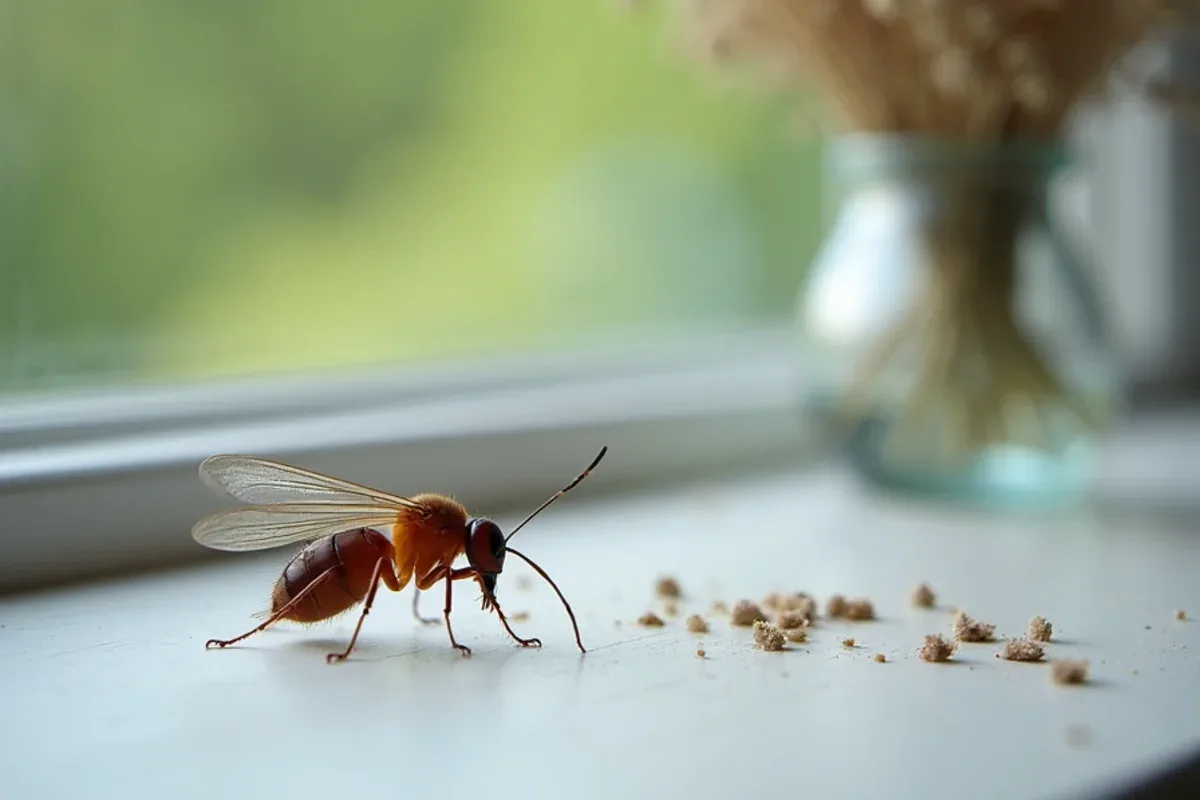
Do not confuse termite swarmers with flying ants. Termites have a thick waist, straight antennae and two wings of equal length. Ants have a pinched waist, bent antennae and wings of unequal length. The distinction matters because the treatments differ, and our post on carpenter ants versus termites walks through it in detail.
How can Jennings County homeowners reduce termite risk?
You cannot make a house termite-proof, but you can make it a poor target. Most of the work is moisture control, because termites that do not find damp wood move on. A spring and fall walk around the foundation takes 20 minutes and catches most of the early warning signs.
Move water away from the foundation
Extend downspouts several feet from the house, regrade low spots so water drains away, and keep gutters clear.
Lift wood off the ground
Keep siding, trim and porch posts above grade. Replace rotted trim and remove old wood left in the soil.
Pull back mulch
Leave a visible strip of foundation between landscape beds and siding so you can see mud tubes.
Manage the crawlspace
Lay a vapor barrier on bare soil, fix leaking plumbing, and keep vents clear of shrubs that trap humidity.
Store firewood away
Stack it off the ground and away from the house. Termites do not need much to find a path.
Look every season
Check sill plates, piers and the garage corners for tubes, and photograph anything you find.
Be careful with do-it-yourself fixes. Stripping paint to look at trim or prying at a tube can scatter termites without finding the colony. Photograph first, then call for an inspection and let the technician trace where the activity leads.
What does a termite inspection and treatment look like?
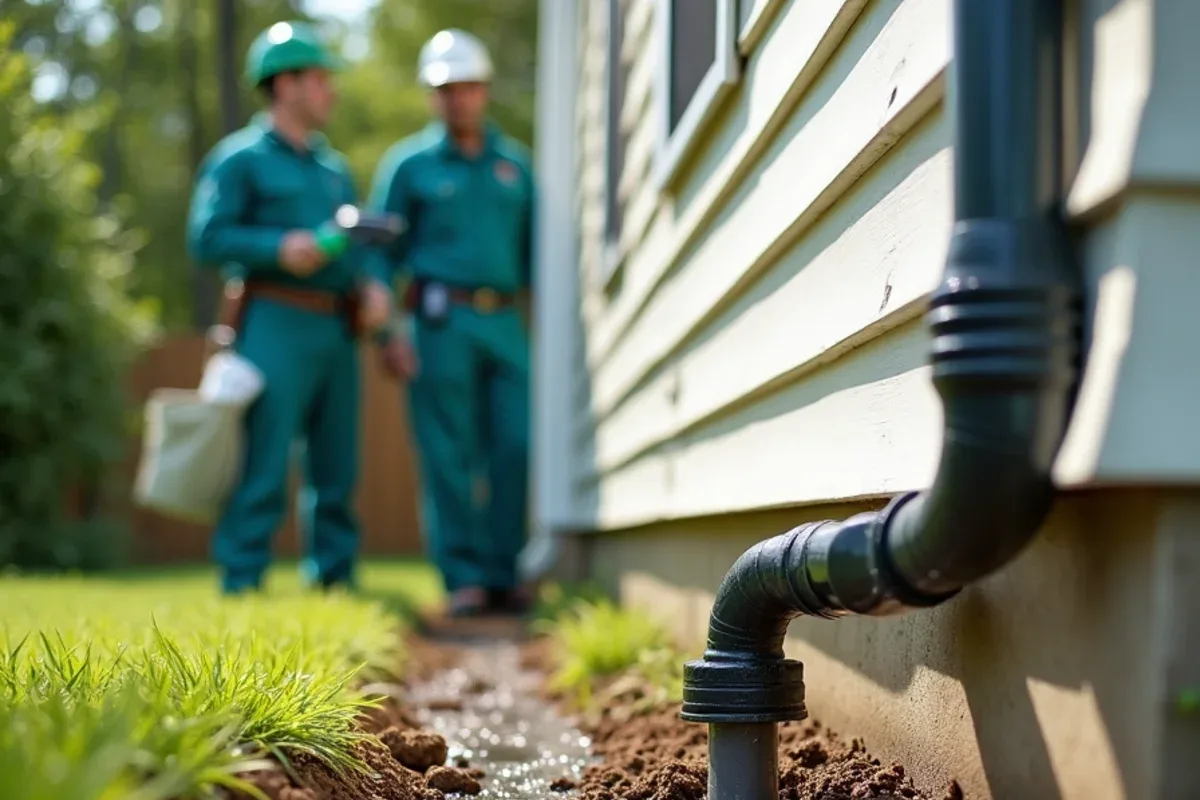
A termite inspection checks the foundation, crawlspace, attic, garage and interior wood for signs of activity or conditions that invite it. A termite inspection is also what a lender may ask for when you buy or sell, usually on the NPMA-33 form. Book it before listing day, not the week of closing.
If termites are found, our termite control work typically uses a liquid barrier around the foundation, bait stations or both, chosen to fit the structure and soil. Homes across Jennings County vary a lot, so the plan should too. Same-day inspection help is available when you find swarmers or tubes and don't want to wait.
After treatment, the follow-up is what protects the work. An annual inspection catches new activity early and keeps small problems small.
Ask the inspector to show you what they find. Good inspectors point out mud tubes, moisture spots and conducive conditions, and explain which ones are urgent. A walk-through with photos tells you whether you need treatment now, monitoring only, or simply a few repairs to the grade and gutters.
Frequently asked questions
When do termites swarm in southern Indiana?
Are termites in Jennings County covered by homeowners insurance?
Can I tell if I have termites without a professional?
How long does termite treatment last?
Termites are a fact of life in this part of Indiana, but they do not have to take your home. Control moisture, watch for tubes and swarmers, and book a yearly inspection. If you see something suspicious in Hayden, Vernon or anywhere in Jennings County, call Miller's Termite and Pest Control at (321) 496-4080.