

How do mice get into a house in the first place?
A house mouse can squeeze through a gap about the size of a dime, roughly a quarter of an inch. Their skulls are narrow and their bodies flex. If you can slide a pencil into a gap, a mouse can usually get through.
Fall is the big push. Cooling nights, cut fields and shrinking food supplies send mice looking for warm shelter, and rural homes are the first stop. Once inside, they breed quickly. A female can have several litters a year, so a handful of mice becomes dozens before winter is out.
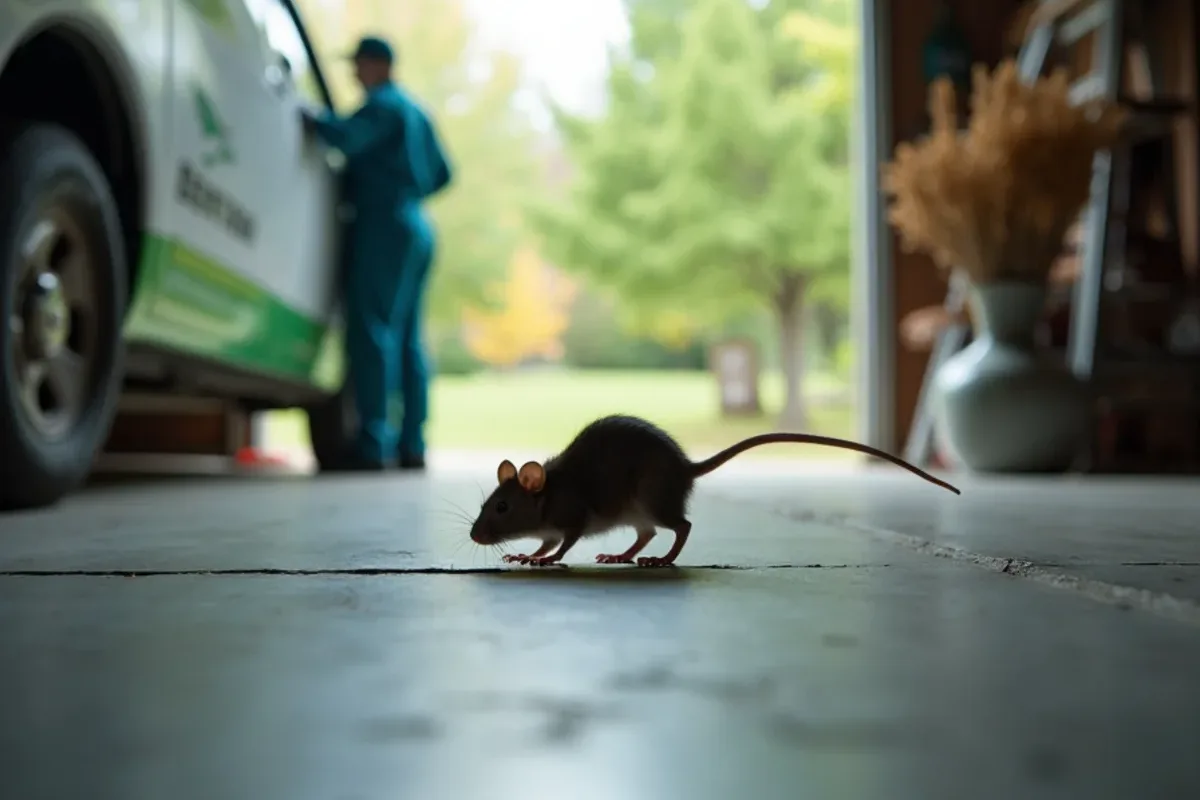
The usual entry points
- Gaps around pipes, cables and gas lines where they pass through the foundation or siding.
- Worn or missing weatherstripping and door sweeps, especially on garage doors.
- Gaps where the sill plate meets the foundation.
- Dryer vents, crawl space vents and chimney flashing with loose screens.
- Rooflines, soffits and fascia where trim has pulled away.
- Utility entrances for AC lines, hose bibs and satellite cables.
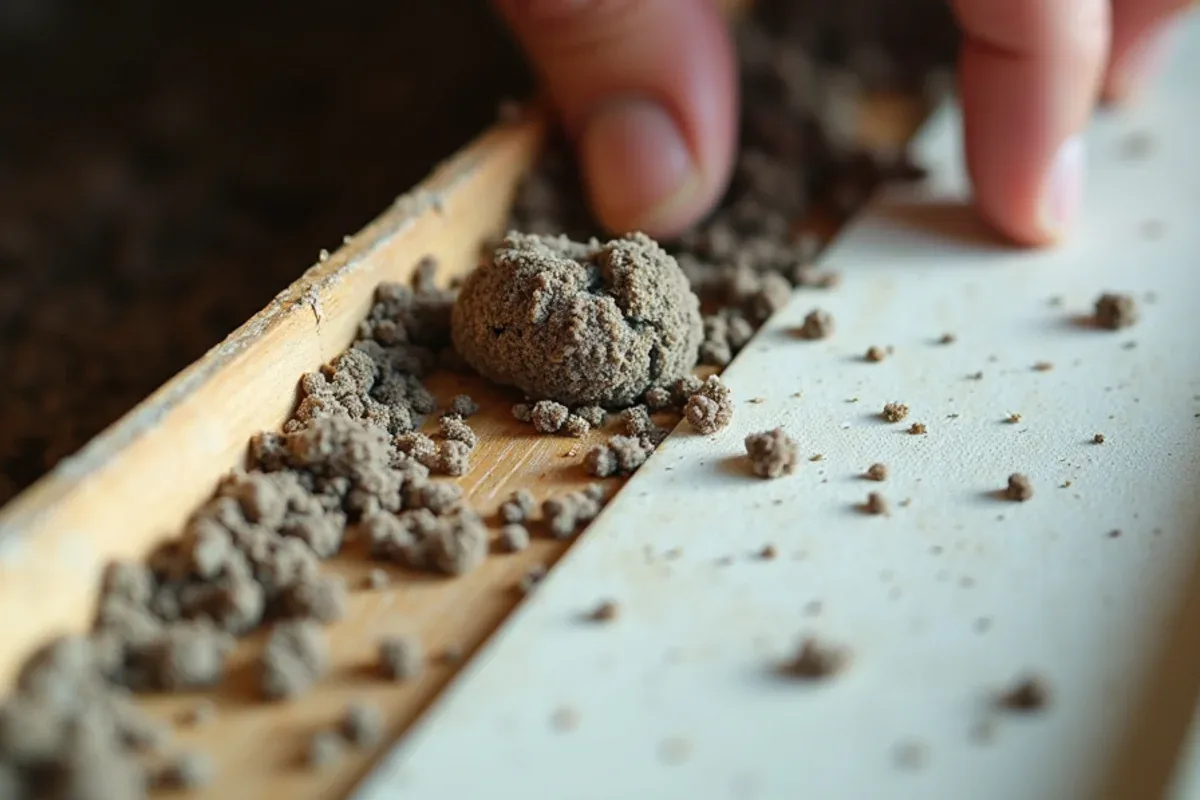
Signs of an active problem include rice-sized droppings, gnaw marks and greasy rub marks along walls. Shredded nesting material and scratching in walls at night are common too. Mice in walls are often heard before they are seen.
Need it handled now?
Call Miller's at (321) 496-4080 for same-day help in the Hayden area.
Exclusion, traps or bait: which one actually works?
Each tool has a job, but they do not do the same job. Exclusion keeps mice out. Traps remove the ones already inside. Bait kills mice slowly and comes with risks. The table shows how they compare.
| Method | What it does | Strengths | Limits |
|---|---|---|---|
| Exclusion | Seals entry points so mice cannot get in | Permanent when done well; stops new mice | Needs a thorough inspection and sealing work |
| Snap traps | Kills mice that are already inside | Quick, no poison, easy to confirm results | Does nothing about the entry points |
| Bait (rodenticide) | Mice eat poison and die later | Can reach hidden populations | Mice may die in walls; risk to pets and wildlife; does not stop reentry |
| Glue boards | Traps mice by adhesion | Cheap | Inhumane, messy, and often fails with larger populations |
Why exclusion wins
Trapping or baiting without sealing is like bailing out a boat that is still leaking. You may catch every mouse in the house, and a new set walks in next week. The trade-off is time and effort up front: finding every gap takes a careful inspection, and sealing a rural home can take hours. But it is the only method that ends the cycle.
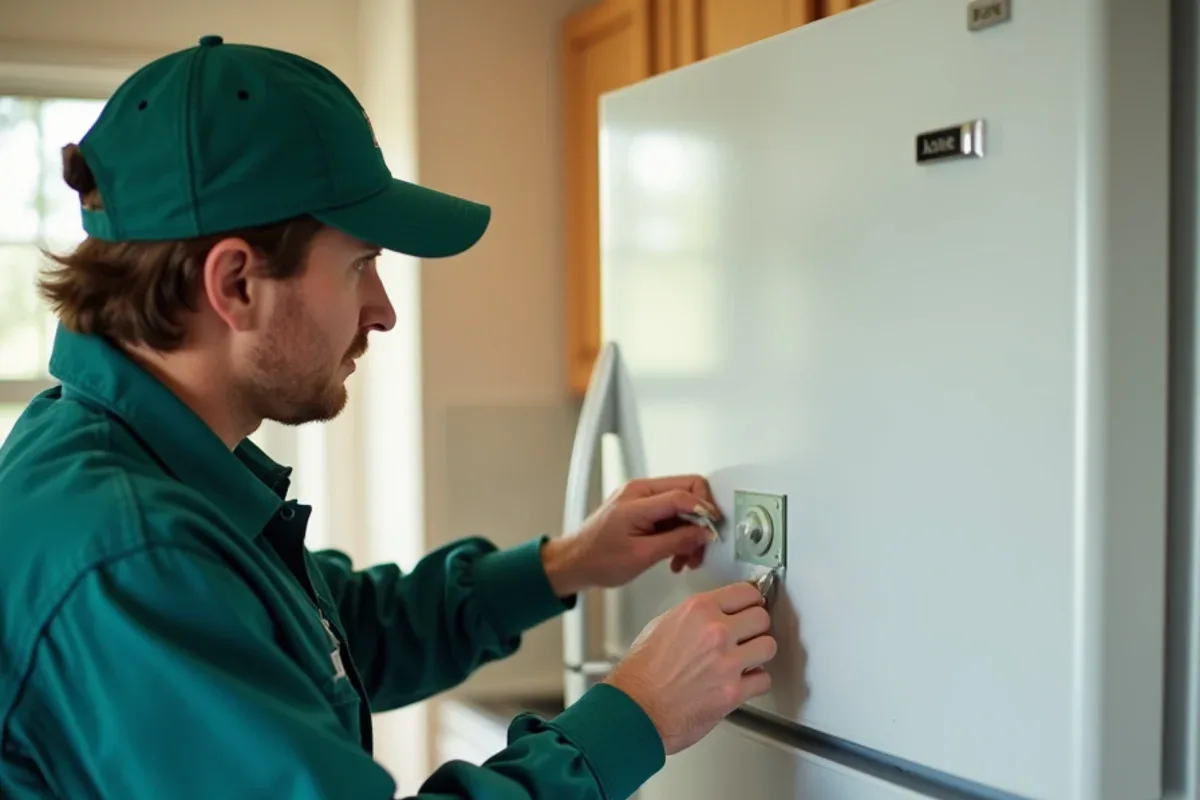
Bait deserves a caution. A mouse that eats rodenticide can die inside a wall, where it leaves an odor for days. Poisoned rodents can also be eaten by owls, hawks and pets. If bait is used at all, it should be in tamper-resistant stations placed by a professional, not scattered around the house.
What should you use to seal mouse entry points?
Mice chew soft materials, so the filler must be something they cannot gnaw through. Foam and plain caulk alone will not hold. The tried-and-true approach is to pack the gap with metal and then seal over it.
- Copper mesh. It does not rust, it is hard to chew and it packs tightly into gaps around pipes and wires.
- Steel wool. It works in a pinch, but it rusts over time, so seal it in with caulk or foam.
- Hardware cloth. Quarter-inch galvanized mesh covers vents, crawl space openings and larger holes.
- Metal flashing and sheet metal. Use these for chewed corners, door bottoms and trim gaps.
- Sealant and mortar. Use exterior-grade caulk, concrete patch or mortar over the metal to lock it in.
- Door sweeps and weatherstripping. Install heavy-duty sweeps on garage and entry doors.
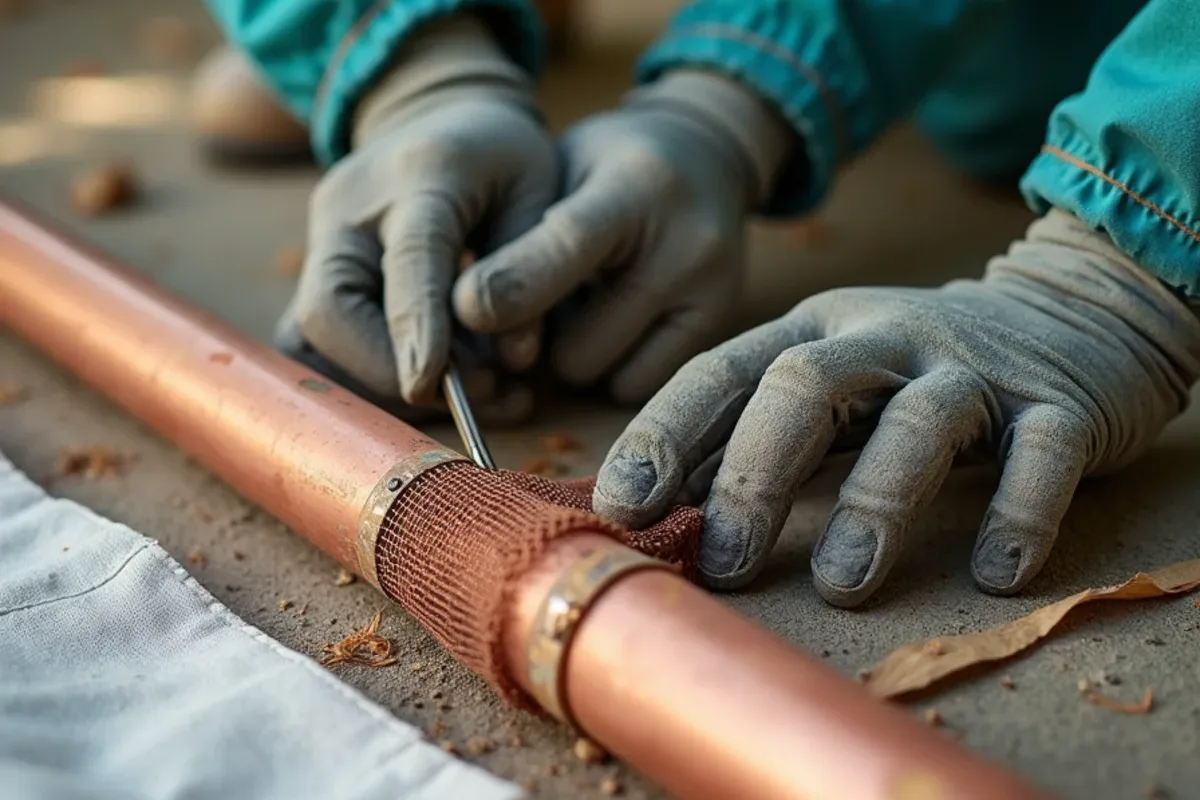
Start low and work upward. Mice use the ground floor first, so seal the foundation and utility penetrations, then move to rooflines. A second inspection after a week confirms that nothing was missed, because new chew marks show where mice are still testing.
Our rodent control service starts with exactly this kind of inspection and sealing. The work is common in small, rural communities such as Scipio, where farm fields border older homes.
How do you trap the mice that are already inside?
Seal first or trap first, but do both. Mice already inside will keep breeding, so removal matters. Snap traps are the best tool for most homes because they work fast and leave no poison behind.
Use more traps than you think
Mice rarely travel alone. Set a dozen or more in a typical infestation, in pairs along walls.
Place traps against walls
Mice run along edges. Set each trap with the trigger end touching the wall, perpendicular to it.
Bait lightly
A pea-sized dab of peanut butter or a bit of nesting material works. Too much lets the mouse lick it off.
Check daily
Dispose of mice with gloves, reset the traps, and note where you catch them. Hot spots show where they travel.
Keep going until a week passes with no catches
Stopping early leaves a few breeders in the walls.
Keep traps out of reach of children and pets, or use covered trap boxes. Wear gloves and avoid sweeping droppings dry. Dampen them with a disinfectant solution, wipe them up and wash your hands.
What about cleanup and odors after the mice are gone?
Mice leave droppings, urine and nesting material that can carry germs and attract other pests. Cleanup is part of the job, and it keeps new mice from smelling an old den.
Ventilate the space for 30 minutes before you start. Wear gloves and a mask, spray droppings with a disinfectant until damp, wait a few minutes and wipe them up with paper towels. Do not sweep or vacuum dry droppings, since that stirs particles into the air.
Contaminated attic insulation sometimes needs to be removed and replaced. If you find large nests or heavy contamination, a professional can advise on cleanup. Once the space is clean and sealed, the smell fades within a few weeks.
Your do-it-yourself checklist for a mouse-proof house
If you want to start today, work through this list. It covers the biggest wins in order. For stubborn or hidden infestations, a professional inspection will find what a homeowner misses.
- Walk the outside and look for gaps larger than a pencil at the foundation, siding and rooflines.
- Stuff any gap with copper mesh and seal with caulk or mortar.
- Replace worn garage and door sweeps so no light shows underneath.
- Cap or screen dryer, crawl space and attic vents with quarter-inch hardware cloth.
- Store pet food, grass seed and bird seed in sealed metal or hard plastic bins.
- Move firewood and brush at least 20 feet from the house.
- Set snap traps along walls, behind appliances and in the attic.
- Reinspect weekly for new gnawing, and seal anything new.
Small towns like Crothersville have plenty of older homes with crawl spaces and stone foundations, which are the easiest for mice to enter. If you would rather prevent a repeat, our preventative pest control plan includes seasonal checks of those entry points.
Frequently asked questions
Why do mice keep coming back after I trap them?
What is the best material to block mouse holes?
Is poison bait a good idea for mice in walls?
How long does it take to get rid of mice?
Getting rid of mice for good comes down to one idea: close the doors first. Seal entry points with copper mesh and sealant, remove the mice inside with snap traps, and check back until the signs stop. If you would like help finding every gap, call Miller's at (321) 496-4080.